
Our commitment to sustainable practices and community development creates lasting positive impact across India
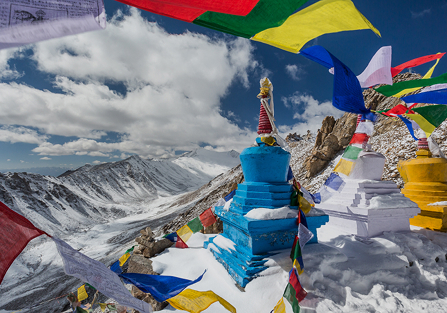
Nestled between the mighty Karakoram and Himalayan mountain ranges, Ladakh is a high-altitude desert known for its stark landscapes, Buddhist monasteries, and vibrant culture. Often called “Little Tibet,” this region offers travelers an experience unlike any other in India.
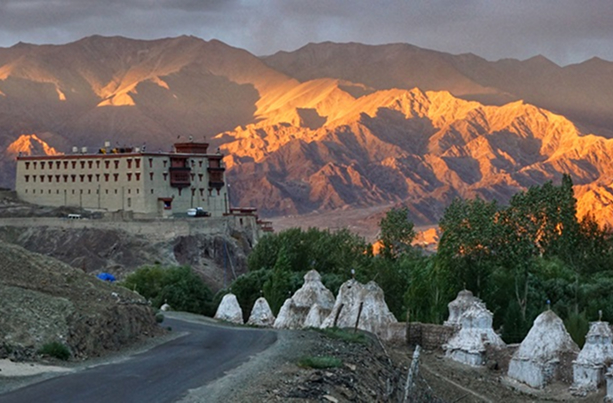
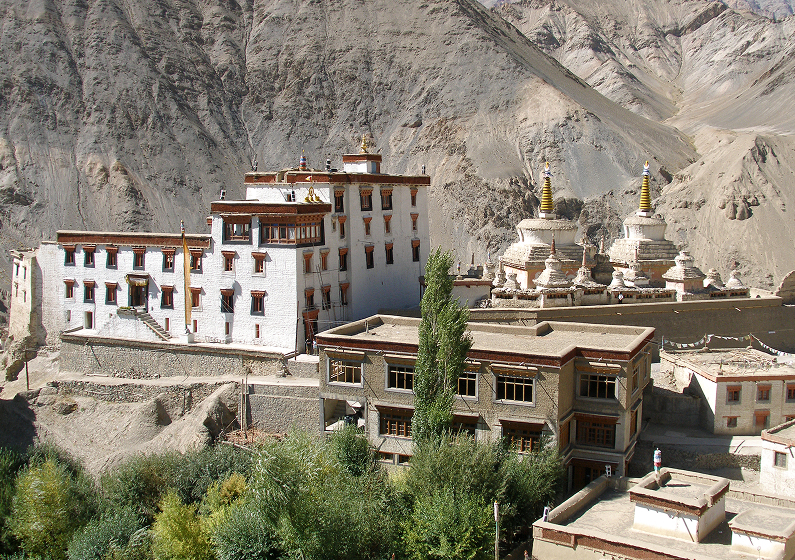
The iconic Thiksey Monastery, perched dramatically on a hill, glows in the morning light.
For over a thousand years, Buddhism has flourished in Ladakh, creating a rich tapestry of spiritual traditions, art, and architecture. The region’s monasteries (gompas) are living museums that continue to be centers of religious practice and cultural preservation.
Our guided journeys provide respectful access to these sacred spaces, with local experts who can help you understand their significance while ensuring your visit supports their conservation.
From the crystal-clear waters of Pangong and Tso Moriri lakes to the sweeping valleys and towering peaks, Ladakh’s landscapes seem to belong to another world. The region’s unique geography has created ecosystems that support rare wildlife including snow leopards, Tibetan wolves, and black-necked cranes.
Our expeditions are designed to showcase these natural wonders while minimizing environmental impact through careful planning and sustainable practices.
The ever-changing blues of Pangong Lake against the backdrop of barren mountains.

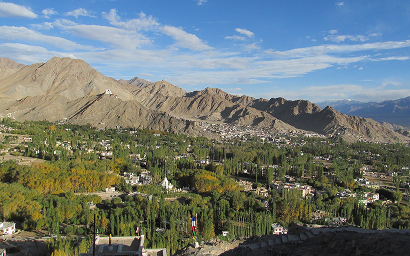
The ancient capital and cultural heart of Ladakh, featuring the Royal Palace, bazaars, and nearby monasteries.

Cross the world's highest motorable pass to reach this fertile valley with sand dunes, hot springs, and monasteries.
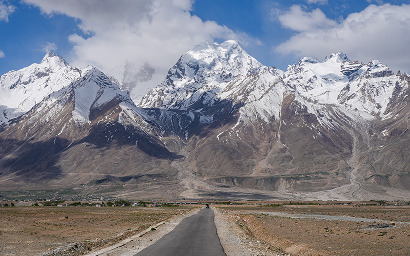
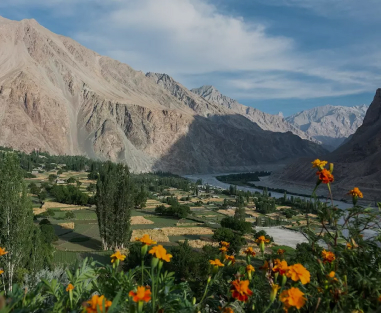
Remote and pristine, this area offers dramatic gorges, traditional villages, and ancient monasteries.
The tourist season in Ladakh runs from May to September, with July and August being the peak months. Winter (October to April) brings extreme cold and limited accessibility, but offers unique experiences like the frozen river trek (Chadar Trek) and snow leopard expeditions for adventurous travelers.
Ladakh's average elevation exceeds 3,500 meters (11,500 feet), which can cause altitude sickness. We recommend at least 2-3 days of acclimatization in Leh before attempting higher passes or strenuous activities. Stay hydrated, avoid alcohol, and consider consulting your doctor about altitude medication before your trip.
Most areas in Ladakh require an Inner Line Permit (ILP) for foreign and domestic tourists. Protected areas like Pangong Lake, Nubra Valley, and Tso Moriri need specific permits. Our team handles all permit arrangements for our guided journeys, ensuring hassle-free travel.
Our Ladakh journeys follow strict sustainability guidelines including waste reduction, supporting locally-owned accommodations, employing local guides, respecting cultural norms, and contributing to conservation initiatives. We also educate travelers about responsible practices and limit group sizes to minimize environmental impact.
Posted onTrustindex verifies that the original source of the review is Google. Himanshu planned our family's first ever safari at Pench and Tadoba. We were celebrating our child's birthday at Tadoba and all we can say is we were blessed by the Tigresses themselves! We were the only lucky ones to experience that magical moment (thanks to his brilliant team member, his guide)! We came back with core memories, not just for us adults, but our kids too. Be it our safaris or our stays, Himanshu made sure we experience nothing but the best! We only had to book our travel tickets, rest everything was planned by him. That left us with only enjoying our trip and not to worry about anything else. We were in touch with him daily and he helped us with every little thing we needed. Him and his team went out of their way to make this trip memorable for us. Himanshu's knowledge about the wildlife is so inspiring. We learnt so much from him and his team. We want to now learn more about the wildlife and do our bit for the nature. Thank you, Himanshu, for setting such a high bar for our experience with the wildlife. This is just the beginning for us. Our children are already animal lovers, after this experience, we know they will give back to the nature, in whatever way possible. We will keep coming back to you for many more core memories!Posted onTrustindex verifies that the original source of the review is Google. If I have a chance to go on a tiger safari again in India, I would go with Himanshu! Our group of 8 friends did a tour in Bandhavgarh National Park in the first week of February, 2025. This was my preference due to my schedule and bc the weather is cool at that time of the year. Although it’s sometimes (but not guaranteed) possible to see tigers at waterholes in April, the temperature is way too hot for me! This was my first safari outside Sri Lanka, so I was a newbie. Most importantly, we had several gorgeous tiger sightings on 3 of our 5-days at Bandhavgarh. We saw “DM”, an awesome 6-year old tiger (I think) moving through the forest and across a clearing. At one point, he was just about 3m from our jeep. He wondered around unperturbed by our presence. Another sighting was of one of a pair of young (3 years?) brothers taking a long drink at a pond looking backwards from time to time, seemingly looking for his brother. Afterwards, he crossed the road in front of our jeep, bc we had left space bw our jeep and the one in front of us (which some guides and drivers don’t do). We were rewarded for this on more than one occasion on the tour. Our first sighting was of his mother (maybe called Dhamokhar Mother), taking a nap in the forest and then rolling over to get comfortable! If my memory serves, the dad was Pujari, who took over Chota Bheems’s territory bw 2024-2025). We saw the young “charger” taking a drink about 100m away, but we had an unobstructed view (she didn’t charge!). Much of these sightings were possible due to the rapport that Himanshu has with Jeetu (our favorite driver) and Amith (our favorite guide). What’s more, we saw the 10thC Shiva temple in Bandhavgarh, an unexpected bonus! It seemed to be the owlet season- we saw several. The sunrise and sunset views through the forest were a feast for the eyes. Himanshu’s arrangement of logistics was nothing less than fantastic. From the moment we met him at the Jabalpur airport, he attended to our needs. From his organization of choosing zones in the park (where possible) many months ahead, to making our hotel arrangements at Bandhavgarh Villas (an excellent hotel complex), to booking a couple of jeeps for our 10 safari excursions, to airport transfers (about a 3- hour drive to the hotels), his service was simply superb. The logistics ran smoothly, which is no mean fete. His communication with us through WhatsApp throughout our roughly 6 months of planning, was excellent. We had many, many questions, and he answered them all patiently. Plus, he is personable and lovely to have on tours! Himanshu organized a post-safari trip to Agra for a few of us to see the Taj Mahal (at sunrise) and Itmad-ud-Daulah's Tomb at sunset. This beautiful mausoleum was built by Nur Jahan (Shah Jahan’s mother) for her parents. This site is called the “Baby Taj”, but that doesn’t do it justice. Himanshu chose our guide in Agra who was both knowledgeable and efficient in guiding us through the sites when the crowds were minimal. Himanshu organized a vehicle and driver (also excellent) to pick us up from our hotel in Delhi and drive us to Agra, around our Agra tours, and back to our hotel the next day. I don’t do reviews and I have no social media presence, so this one is rare. I wanted to write a relatively detailed review so it took a while to get to it, but it has been on my to-do list! I hope my review gives you a sense of my experience of both the tiger safari as well as the tour of Agra. As I said at the start, if I could do another tour in India, tigers or otherwise, I would reach out to Himanshu. So stop your search and book him!! Himanshu, thank you for a truly awesome experience!Posted onTrustindex verifies that the original source of the review is Google. Himanshu Sir is a travel guide who is an expert r on tiger reserves across India. The hotel stay was extremely comfortable and the food, service, and overall expertise of our stay was excellent. selected was of high-quality and comfort. They took care of our daily packed breakfasts, all our meals and overall comfort. We had some amazing sightings. We saw tigers at multiple gates, leopards, snakes and lots of other wildlife. He had also arranged a night safari which was extremely beautiful. Overall, Himanshu sir is highly recommended as a travel guide for India as he understands the purpose and nature of the trip and plans accordingly. He will surely be our preferred choice for future trips.Posted onTrustindex verifies that the original source of the review is Google. Hello Himanshu, Thank you so much for our trip to Kanha. It has been a wonderful time being there to enjoy the majestic and beautiful forest of Kanha with our kids. Yes it was a bit disappointing for us when we couldn’t spot any tigers in earlier safaris. But still it was so good to be there amongst nature while Rohit and Prashant along with Manish and other super guides shared wow information with us. Thank you for making our trip a memorable one. We definitely want that you accompany us in our next trip. See you soon. Regards, Kids and mommies 😇Posted onTrustindex verifies that the original source of the review is Google. Himanshu made our trip to Tadoba a memorable one! From our first point of contact till the end he made sure we had an excellent time. His knowledge of Tadoba was super impressive. We had an excellent trip thanks to him. Would definitely recommend him.Posted onTrustindex verifies that the original source of the review is Google. We had the most Amazing experience in seeing Tigers in Bandhavgarh. There was a group of 8 and Thank you Himanshu for having organized an incredible trip. From the moment we landed in Jabalpur you and your team took over everything to make it as comfortable as possible. The sightings were incredible. A big Thank you to Amith and Jeetu too. Your knowledge and passion shone through every moment of our tour.Posted onTrustindex verifies that the original source of the review is Google. Himanshu Bagde is a travel agent specializing in tiger safaris in India, known for his exceptional care and organization. He possesses exceptional knowledge of the jungle and its wildlife, making park rounds engaging despite occasional challenges in spotting tigers. The hotel he had selected was of high-quality and comfort. The staff were very attentive and the service standards were high. The meals which were provided were of very good standard. The packed breakfasts from the hotel was commendable. During our safari to Bandavgarh, ( Feb 2025) he efficiently managed logistics, including resolving a luggage issue by arranging for a guest's missing bag to be delivered to the hotel, avoiding a trip back to the airport. He also adeptly handled a situation where a guest needed to leave early due to an emergency. He ensured a personalized experience in food and shopping. The tiger sightings were remarkable, making the trip well worth the cost. Additionally, Himanshu successfully arranged a visit to the Taj Mahal for some group members after the safari, further enhancing their experience. Overall, Himanshu is highly recommended as a travel guide for India, and he will be our preferred choice for future trips.Posted onTrustindex verifies that the original source of the review is Google. Himanshu is a perfect mix of exceptional knowledge and expertise in tiger safaris, superlative customer experience and perfect execution. I have worked with Himanshu in managing a group of over 50 demanding persons in Pench on an airport to airport basis and he delivered flawlessly from transfers to resort management to meal management to safari management with extras like star gazing and live music thrown in. Himanshu is definitely our go-to man for a central india tiger reserve safari holiday. Leave it to him and enjoy the experience.Posted onTrustindex verifies that the original source of the review is Google. As an animal lover and travel enthusiast, I have always been drawn to wildlife, with Lions and Tigers as my favourites. Having been on safaris in Kenya and Madhya Pradesh as a child, returning to India’s Tiger country, the setting of The Jungle Book (by Rudyard Kipling), was a dream come true. Tadoba’s lush foliage and streams perfectly matched my imagination, and I gained new and fascinating insights and knowledge into what I had earlier not known such as Tiger migration across India. Thanks to Mr. Bagde, recommended by a family friend in New Zealand, I was fortunate to spot Tigers every day—an incredible feat, as Tiger sightings are never guaranteed. It was (as always) equally wonderful to see other wildlife sharing the Tiger’s home. While the resort’s service could improve in areas like bathroom preparation, the staff’s warmth and the delicious, versatile cuisine made up for it. Overall, this was an unforgettable experience that I would highly recommend to anyone seeking to see Tigers in the wild.Verified by TrustindexTrustindex verified badge is the Universal Symbol of Trust. Only the greatest companies can get the verified badge who has a review score above 4.5, based on customer reviews over the past 12 months. Read more
Let our travel experts help you create a personalized journey through this Himalayan wonderland.
Curated wildlife adventures where your journey celebrates and conserves the natural world
Stay updated with our latest offers and stories.
Stay updated with our latest offers and stories.
© 2025 Kalyaan Mitra. All rights reserved.